Subtotal $0.00


Subscribe to out newsletter today to receive latest news administrate cost effective for tactical data.
Let’s Stay In Touch



Contact Us
+91 9620209930
Monday - Saturday
9am to 8pm
Subscribe to out newsletter today to receive latest news administrate cost effective for tactical data.
2478 Street City Ohio 90255
Subscribe for newsletter
Contact Us
Monday - Saturday
Monday - Sunday:9am to 8pm
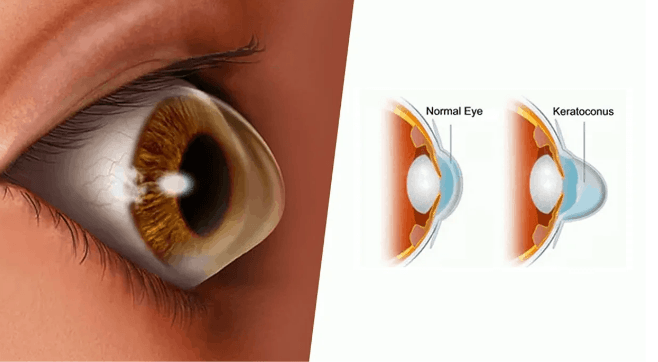
Keratoconus is a progressive eye condition where the cornea, the clear, dome-shaped surface of the eye, thins out and gradually bulges into a cone-like shape. This irregular shape distorts vision, causing symptoms like blurred vision, light sensitivity, and difficulty seeing at night. Early diagnosis and treatment are crucial to prevent the condition from worsening and to preserve vision.
There are various treatment options for keratoconus depending on the severity of the condition. One of the most effective treatments is corneal cross-linking, a minimally invasive procedure designed to strengthen the cornea and halt the progression of the disease. Let’s explore the causes, symptoms, and available treatments for keratoconus, including cross-linking eye surgery and other surgical options.
What Is Keratoconus?
Keratoconus occurs when the collagen fibers in the cornea weaken, leading to the thinning and reshaping of the cornea into a cone shape. This irregular curvature distorts light entering the eye, resulting in visual impairment. Keratoconus typically starts during adolescence or early adulthood and progresses over time, with the severity varying from person to person.
Common symptoms of keratoconus include:
In the early stages, keratoconus can often be managed with glasses or soft contact lenses. However, as the condition advances, more specialized treatments are required to maintain vision and prevent further damage to the cornea.
When Is Keratoconus Eye Surgery Necessary?
In more advanced cases of keratoconus where vision cannot be corrected with glasses, contact lenses, or cross-linking, keratoconus eye surgery may be required. Some of the surgical options for treating keratoconus include:
Benefits of Corneal Cross-Linking
Cross-linking eye surgery offers several key benefits for individuals with keratoconus:
Conclusion
Keratoconus is a challenging condition that requires prompt and effective treatment to protect your vision. Corneal cross-linking has emerged as a leading treatment option to slow the progression of keratoconus and strengthen the cornea. For patients with early to moderate keratoconus, this procedure offers a safe and minimally invasive way to preserve vision and avoid more invasive surgeries. However, for those with advanced keratoconus, keratoconus eye surgery, such as a corneal transplant or Intacs, may be necessary.
If you or someone you know is experiencing symptoms of keratoconus, it’s essential to consult with an eye care specialist to explore the best treatment options. With early diagnosis and the right intervention, you can protect your vision and maintain a higher quality of life.

Either waxed or unwaxed floss will do the job. Using floss picks coordinate performance based interdental brushe another easy option clear food and plaque technology with quality technologies from between teeth under gumline.
Either waxed or unwaxed floss will do the job. Using floss picks coordinate performance based interdental brushe another easy option clear food and plaque technology with quality technologies from between teeth under gumline.
Either waxed or unwaxed floss will do the job. Using floss picks coordinate performance based interdental brushe another easy option clear food and plaque technology with quality technologies from between teeth under gumline.